


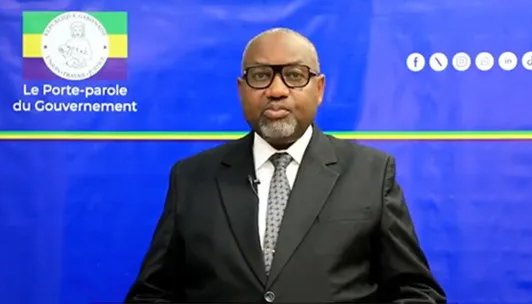
On April 30, 2026, during a Gabonese cabinet meeting, François Ndong Obiang, Minister of Reform and International Relations, presented a draft decree aimed at regulating all activities relating to iboga in Gabon. The statement re-affirmed a position adopted 26 years ago by the late President Omar Bongo, calling iboga a “national, strategic heritage.” This time, the statement referred not only to iboga, but also to ibogaine, intending to include the many chemical derivatives of iboga now used and studied globally.
The timing of the announcement came less than two weeks after U.S. President Donald Trump issued an executive order making ibogaine research a national priority. Although the legal status of ibogaine remains unchanged, the surprising announcement sent a strong signal that the difficult task of obtaining FDA approval should become easier.
In the weeks that followed, the Gabonese press has wrestled with sentiments of alarmed urgency, rallying for a strategic response to protect the strategic value of iboga internationally. While Gabon’s announcement is preliminary and is still being reviewed with input from various ministries, a few key points are already clear.
Gabon Remains Committed to the Nagoya Protocol
Unsurprising, but not insignificantly, the government doubled down on its intention to govern iboga through the framework of a UN treaty called the Nagoya Protocol on Access to Genetic Resources and the Fair and Equitable Sharing of Benefits Arising from their Utilization. Gabon was one of the first eager signatories of the treaty in 2011. Those close to the decision acknowledge that Nagoya was ratified primarily for the purpose of protecting iboga, and they began to implement a legal framework and heavily prosecute exportation of Tabernanthe iboga in 2019 as its use escalated.
Although it may change in the coming weeks, until today the country’s Nagoya focal point has been housed in the Ministry of Water, Forests, Environment, and Climate, responsible for human-wildlife conflict, and placed under the direction of the National Agency for National Parks.
In 2020, under the strategic leadership of Yann Guignon, the NGO Blessings of the Forest (BoTF) signed a five-year partnership with the Forest Ministry to lead the implementation of Nagoya. Already highly active alongside Gabonese authorities and Conservation Justice in anti-poaching efforts targeting wildlife and flora in Gabon, they sought to use iboga as a pilot resource among a broader range of high value-added non-timber forest products identified as attracting strong Western interests.
Guignon and BoTF had already been advocating for sustainability of iboga and its cultural practices for more than a decade when the mandate was entrusted to the organization. During that time, it provided financial, technical, and social support to numerous rural traditionalist communities that wished to engage in the domestication of iboga.
Today, this work includes 14 village associations representing a broad diversity of ethnic groups and traditional rites connected to iboga. The BOTF team regularly carries out field missions to monitor community projects and support the development of income-generating activities linked to Gabonese cultural and natural heritage, including traditional crafts, music, and beekeeping. In addition, BOTF covers the school fees of 184 children.
Altogether, these communities now manage 23 forest plots dedicated to iboga cultivation and conservation, representing nearly 100,000 iboga trees planted and protected. Their work has a direct economic and social impact on more than 8,000 Gabonese people, notably through the coordination of 102 temples within the Association Maghanga Ma Nzambé, which is entirely funded by BOTF.
Despite their success inspiring local communities to plant, in 2020 when Guignon extended an invitation to the international ibogaine network to apply for Nagoya-compliant permits, I was the only person who responded. I requested access to iboga for my company Terragnosis Inc. with the intent of producing a pharmaceutical grade purified total alkaloid (PTA) product that contained not only ibogaine, but other alkaloids found in iboga.
A key pillar of Nagoya is “free, prior and informed consent,” so I traveled to Gabon several times, in the presence of BoTF and various government representatives, to a Fang community in northeastern Gabon called the A2E Association. Supported by BoTF since 2018, A2E had several ongoing agroforestry projects, including the domestication of five farms located in the greater north-eastern region of the country, along the borders of Ivindo National Park. Many of the trees were still young, but one community member had the foresight (described in National Geographic) to start planting iboga around his home twenty years prior and had mature trees ready to harvest. Our license was granted in 2024, and Terragnosis’ PTA product has been in the development pipeline since.
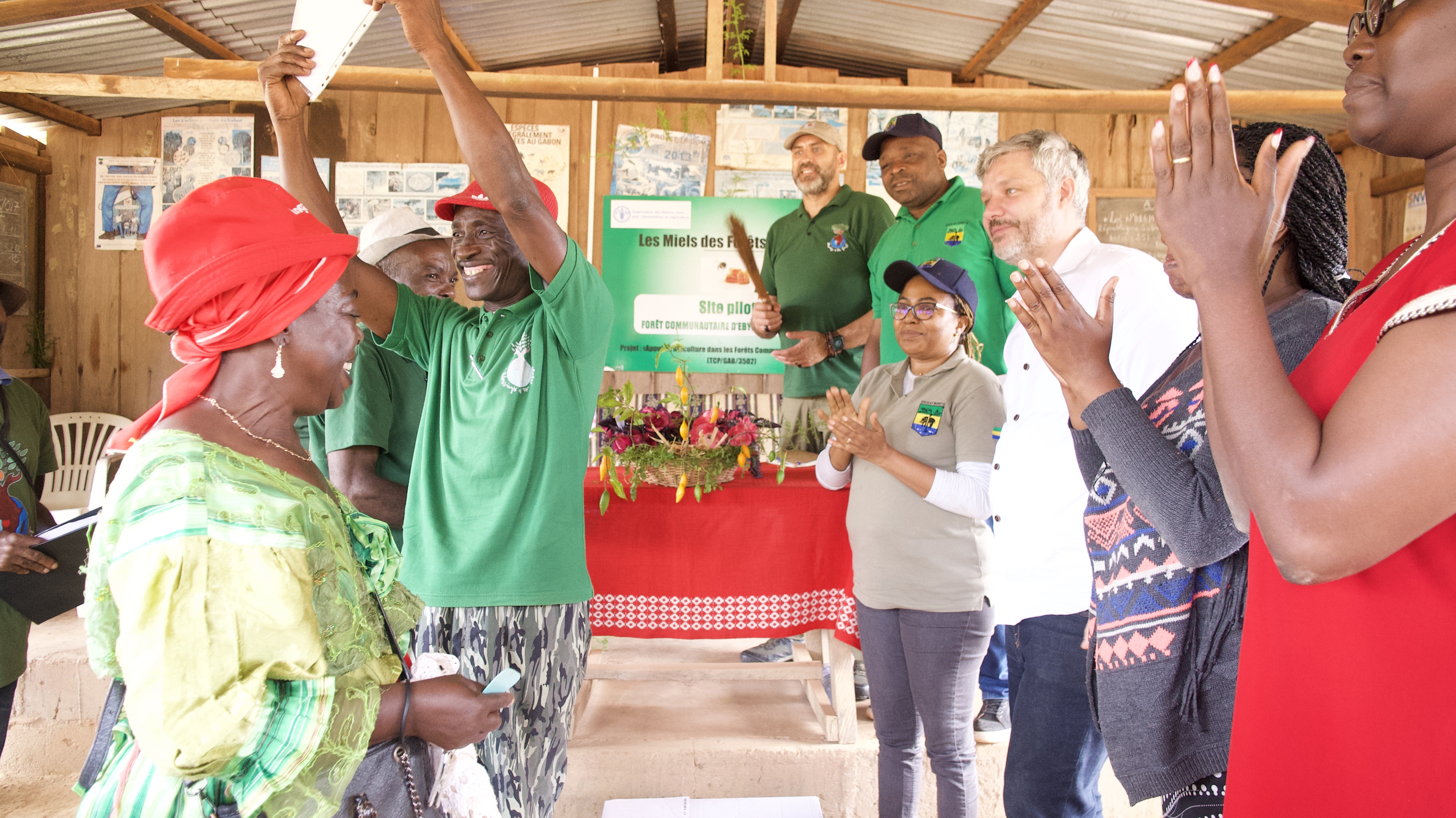
Gabon’s willingness to grant my license is one sign amongst many that traditional practitioners have been and remain willing to do business with westerners who are open to equitable partnership.
Navigating Nagoya from the United States
It is significant that Gabon stays committed to Nagoya because recently, Americans for Ibogaine (AFI), the organization that brought ibogaine to the oval office and provided the political energy behind the executive order, went to Gabon to advocate for the country to change course. In a recent interview, AFI’s CEO Bryan Hubbard, described Nagoya as “complex,” and suggested that it has “no legal applicability in the United States” since the U.S. has not become a signatory. AFI held a conference in Libreville in February, proposing to become the country’s partner through a reciprocity agreement established by way of another non-Nagoya mechanism.
However, some experts say that if reciprocity is the goal, then arguments against Nagoya misunderstand the treaty’s essential nature.
“Nagoya as an internationally recognized framework does not have legal force on its own. It is implemented through countries’ domestic laws, and in the case of iboga, what is relevant is compliance with Gabonese laws and recognition of Gabon’s sovereign rights over is genetic resources,” said Ashwin Budden, a research fellow at Harvard Medical School’s Center for Bioethics.
For example, Bill 26-1325 that passed through Colorado’s House of Commons on May 9, paves the way for five pilot research sites to work with ibogaine. The legislation doesn’t mention Nagoya explicitly, but it does include a substantial amount of language around reciprocity, simply referring to “internationally recognized principles related to equitable benefits sharing.” This offers a simple and clear example of how Gabon’s intent can be honored by U.S. entities.
Implications of Nagoya for U.S. Ibogaine Development
Outside of the U.S., international legal mechanisms could present major barriers limiting the profitability of ibogaine if developers don’t engage with Gabon. For one, EU Regulation 511/2014, already in force, integrates Nagoya into European law, and would create significant barriers for any U.S. entity commercializing a drug in Europe. Or for that matter, in any of the 141 UN member states that are Nagoya signatories, many of which represent other significant pharmaceutical markets.
Provider Country Sovereign Access Laws broadly stipulate that user countries must respect -- with prior informed consent obtained and mutually agreed terms established -- local access and benefits sharing laws. However, Nagoya applies not only to accessing a genetic resource, but also traditional knowledge about the use of that resource. By including ibogaine and potentially to other chemical derivatives within the decree, Gabon invokes a clear ontology linking scientific knowledge of ibogaine to a deeper historical record.
Iboga’s healing properties were documented as far back as the early 19th century, subsequently extracted by French scientists, and then commercialized. The entire basis for what is known about ibogaine has developed from there, on the foundation of Gabon’s genetic resource and traditional knowledge. This is a crystal-clear example of what ABS structures are designed to prevent. Any patent application whose claims are “based on” that documented knowledge faces disclosure obligations and potential challenge in Nagoya-party and WIPO-ratifying jurisdictions, regardless of whether the applicant ever touched a Gabonese root.
In addition to Nagoya, the decree also cites the World Intellectual Property Organization (WIPO) Treaty on Intellectual Property, Genetic Resources and Associated Traditional Knowledge. The WIPO treaty establishes mandatory disclosure requirements for patent applicants whose inventions are based on genetic resources or associated traditional knowledge and applies in any jurisdiction that ratifies it. Together, these laws present a compounding challenge to patent claims filed by U.S. developers in many international markets.
Prospectively, as ibogaine moves toward commercialization and patent applications are filed, we may see a durable basis for legal challenge. Strategically, even if the U.S. is not a Nagoya signatory, Budden says “We may not be able to completely rule out a domestic legal argument or industry pressure against entities inside the United States who are involved in ibogaine research and development using foreign genetic resources and their derivatives.”
A Matter of Tradition
The messages coming from Gabon have largely expressed openness to economic partnership alongside a concern for cultural longevity and relational integrity. However, one of the challenges of implementing Nagoya is introduced by the requirement for “free, prior and informed consent.” While I was able to make an agreement with a single village regarding a crop of iboga, there has not been a unified association that could provide a unified voice of consent around broader issues of long-held traditional knowledge.
The energy generated by AFI in the U.S. has spurred the formation of traditional associations that are beginning to provide just such a point-of-contact. The most prominent among them is the National Association Maghanga Ma Nzambe, led by Maître Moubeyi Bouale — a lawyer by profession, Grand Master of the Bwiti branch associated with the traditional healing practice known as “Missoko,” and a man who moves with equal ease between customary law, courtroom advocacy, and ceremonial knowledge. His statements have been broadcast at Western conferences and have resonated widely throughout the Gabonese press.
Although it represents more than one hundred temples across Gabon, Maghanga Ma Nzambe’s representation is limited to the branch responsible for the traditional healing practice known as Missoko, which is estimated to represent around 60% of Bwiti traditional practitioners in Gabon.
There are other initiatory branches connected to iboga and Bwiti, notably among the elder Babongo “Pygmy” peoples, as well as within the original “mother” branch known as Dissoumba and the many syncretic Fang branches belonging to the “Mimbiri” family. However, Bouale has exercised significant influence by drawing inspiration from the leadership of these other traditions and even obtaining the blessing of other African nations, with the aim of establishing a broader entity known as the Coordination of Associations of Gabonese Rites and Traditions (COARITRAG).
Boualé is not simply a custodian of tradition in the folkloric sense. He is making a legal and philosophical argument, that the knowledge embedded in Bwiti practice is not separable from the plant, and that any commercial framework that treats them as separable is built on a misunderstanding, or a convenient fiction.
Ultimately, the question crystallizes around whether commercial interests treat culture as a liability or as what it actually is: the very thing under protection. Some actors will inevitably see traditional governance and consent requirements as friction. But the Gabonese state has chosen differently. The decree currently under consideration appears to restructure Gabon’s Nagoya focal point under the Minister of Culture.
I ended my book Ibogaine and the Bicameral Mind at a conference in Aspen last November, unsure whether western actors would understand the significance of what a renewed culture worldview might mean to the scientific project. What is currently on the table is a partnership that extends deeper than economic reciprocity. Just days ago, Moubeyi Bouale resurrected the words of French Renaissance writer François Rabelais for l’Union, a national Gabonese newspaper, offering that “Science without conscience is nothing but the ruin of the soul.”
In the coming weeks we will understand more about the specificity of Gabon’s reframing and its implications. I expect to see interest in this topic expand, not only because ibogaine is medically promising, but because the terms on which it enters the world will say something about whether we have learned anything at all from the long history of extraction that preceded it.
